There is a growing and very appropriate concern today about childhood obesity and the effects that it is having on children in our community. The long-term physical and psychological effects of childhood obesity are very serious and special attention should be paid to encourage good nutrition and a healthy body weight early in life.
There is a great deal of information available through the Internet, news media, popular magazines, and books about what child should and should not eat. It can be very easy to feel confused and discouraged. The good news is that there are simple, easy to follow guidelines available to help you make good food choices for your family.
In 2011, the United States Department of Agriculture (USDA) created a special MyPlate to provide nutritional guidance for children and adults of all ages. You can use the MyPlate template for all ages by adjusting the plate size. For young children and toddlers, the plate should be about 5-6 inches across or the size of a small child’s plate. For older children and adults, the plate should be about 7-9 inches across or the size of a salad plate. Traditional dinner plates are 12 inches across and will usually hold too much food for any person of any age.
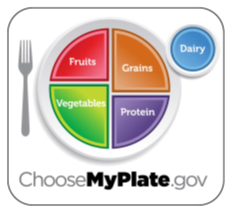
The USDA also encourages families to eat healthy by making these changes:
Balance calories by: - Enjoying your food, but eating less
- Avoiding oversized portions
Foods to increase: - Make half your plate fruits and vegetable
- Make at least half you grains whole grains
- Switch to fat-free or low-fat (1%) milk
Foods to Reduce: - Compare sodium in foods like soup, bread and frozen meals- choose the foods with lower numbers
- Drink water instead of sugary drinks.
Here are a few of the on-line resources available to parents who wish to learn more about nutrition and fitness in children:
Powered by RemedyConnect.
Please read our disclaimer.